November 6th:
Richard showed us Superheroes documentary in channel 5. we then talked about real life people and their strange hobbies.
Me and Jonny talked about what kind of documentary that we want to make. Jonny was the one who picked the idea called Larping. I decided to go with his ideas because he was passionate about it and had lots of knowledge.
Jonny showed me what is larping in the website because I had no knowledge. He talked about weapons, costume, game rules, events and friends' hobbies.
November 13th:
Richard gave us little instruction, we had to make a film in between 2 to 3 mins.
Me and Jonny were doing some research about Larping.
I learned that LARP stand for 'LIVE ACTION ROLE PLAY'
Jonny to meet most people who are into Larping action.
Look at history of how it began.
Jonny was making storyboard concepts and showed me what he wanted.
November 20th:
We thought we were using stereotype looking people and stereotype Larp characters.
Me and Jonny had ideas,
a person wearing a hoody (teenager "Chav") wear a costume with a hood. (Assassin)
Dustbin man = High VIX jacket (Barbarian)
Kitchen worker = white coat/hour net (Healer)
Jogger (Archer)
Business man (Knight)
Jonny showed the website called Lorien Trust, it is company who sell weapons, costume, amours and make ups.
We planned to interview Jonny's friends and to film at Larping action.
Pre-production was starting,
I was doing health and safety, Call sheet and Cast list.
Jonny will film at one of the larp event.
November 27th:
Jonny did a rough storyboard.
I looked for the font and found "Deutsches zierschrift" So I gave the font to Jonny.
Antony was doing shots?
Jonny can get the costumes for next weeks filming.
Jonny will colour the font at home.
December 6th:
Sean gave us a lift by using his mini bus. He took us to 'Hunter's way' road. I set the camera up and checking it. However the problem is the camera was not working with my SD Card 10 class and the tripod was unstable. We went back to York College to get other SD Card 8 class and replaced the tripod with better stable. We went back to 'Hunter's way' again.
I take the role as cameraman and actor.
When we finished the filming so we went back to York college and then we acted in the green screen.
Wednesday, 18 December 2013

Film Project (Shaun of the Dead) Unit 38
Me and Jonny joined up to make Foley sounds for the film, 'Shaun of the Dead'.
When Jonny was not here, I went outside and I was looking for the sounds. (soft winds and footsteps).
I made few sounds so far outside. There were problems trying to get the right wind sounds because it was a noisy environment with sounds like the cars, leaves rustling mixed in with the strong wind. I would not be able to get rid of the extra sounds digitally.
I went inside of York College. I looked for the sounds (footsteps indoor, fan noisy, hitting the wall with the shoes). I went to the small shop called 'Duets' to use the real fridge. It created the sounds for fridge's opening and closing. However at editing, I could hear there were two people talking behind fridge opening and closing. I decided to remake the sounds. I went to the downstairs because it was quite and empty. I tried to make a sound like the character's shoes as they hit the roadblock. However during editing, the sound was like a bit echo. I went to the office to get the fan and used it to make a sound like a fan sound. I used my voice to make a sound for Zombie's groan.
Jonny was here, he listened all of the sounds that I made. He gave me a feedback and decided to remake the some sounds that I made. For example, footsteps indoor sounded a bit like a splash. so we used a different flooring and found concrete made a similar sound. We also re recorded the sound when the character trips by using our shoes against the wall outside the college.
Jonny knew a room which was very quite so we went to that room. Jonny used his voice for 'yelling-running man's' character sound. I made the sound like slipping on the blood by rubbing my shoes on the floor to create the sound. I had a idea and I told Jonny that I used my hand to scratch my head. It created the sound like the character when he scratched his head. I used whistle to create a sound like a car alarm.
At editing, we did not use EQ, Pitch and Reverb because I don't have a skill to do that. I need to learn how to use them. This is something I will do in the future.
We worked well as a team. Jonny and me divide the tasks between us and we listen to each other's views and take on board any positive criticisms. Jonny can help to fine tune the sounds I have made and that is a good thing to do so we produce some quality work. However, if all of members are here then teamwork would be the best and with good time management we could complete the work earlier.
When Jonny was not here, I went outside and I was looking for the sounds. (soft winds and footsteps).
I made few sounds so far outside. There were problems trying to get the right wind sounds because it was a noisy environment with sounds like the cars, leaves rustling mixed in with the strong wind. I would not be able to get rid of the extra sounds digitally.
I went inside of York College. I looked for the sounds (footsteps indoor, fan noisy, hitting the wall with the shoes). I went to the small shop called 'Duets' to use the real fridge. It created the sounds for fridge's opening and closing. However at editing, I could hear there were two people talking behind fridge opening and closing. I decided to remake the sounds. I went to the downstairs because it was quite and empty. I tried to make a sound like the character's shoes as they hit the roadblock. However during editing, the sound was like a bit echo. I went to the office to get the fan and used it to make a sound like a fan sound. I used my voice to make a sound for Zombie's groan.
Jonny was here, he listened all of the sounds that I made. He gave me a feedback and decided to remake the some sounds that I made. For example, footsteps indoor sounded a bit like a splash. so we used a different flooring and found concrete made a similar sound. We also re recorded the sound when the character trips by using our shoes against the wall outside the college.
Jonny knew a room which was very quite so we went to that room. Jonny used his voice for 'yelling-running man's' character sound. I made the sound like slipping on the blood by rubbing my shoes on the floor to create the sound. I had a idea and I told Jonny that I used my hand to scratch my head. It created the sound like the character when he scratched his head. I used whistle to create a sound like a car alarm.
At editing, we did not use EQ, Pitch and Reverb because I don't have a skill to do that. I need to learn how to use them. This is something I will do in the future.
We worked well as a team. Jonny and me divide the tasks between us and we listen to each other's views and take on board any positive criticisms. Jonny can help to fine tune the sounds I have made and that is a good thing to do so we produce some quality work. However, if all of members are here then teamwork would be the best and with good time management we could complete the work earlier.
Thursday, 12 December 2013
Cyber-bullies and Swearing videos for police evaluation
We were given a brief by the police, who visited York College's classroom. They wanted each group to make videos which are 2-3 minutes long, and then combine their videos into one. They are aimed at young children about 12 to 14 years old who are learning about Anti-social behaviour.
My group choice was 'Misuse of Social Media' because I believe most kids have a lack of knowledge about cyber-bullying and new technology. So I used my best skills to make special effects to make this video a big selling point.
My group (Cyber-bullies) were me, Jackie and Naomi. My co-group (Swearing) were Jonny, Regan, Connor and Nyall.
Cyber-bullies
What I did (Pre-production):
Risk assessment
Script shot list.
Research, Notes and ideas for anti-social behaviour
Contingency plan
I created the Risk Assessment and Contingency Plan without any problems. When Jackie was not here, I found it a struggle to make the script shot list, so I worked with Naomi to do the storyboard and script. I put lots of my ideas into my Research, Notes and Ideas blog. I wrote about the Text message effect style from Hollyoaks. I researched facts about Cyber-bullies and taglines and then got the idea of how to create the quote.
What I did (Production)
Asst. Director
Cameraman
Camera works
Help other's equipment
Jackie asked me to be 2nd Asst. Director. During filming, I watched how Jackie directed the actress, cameraman and camerawork. After that, I helped Jackie to improve the camerawork. For example, Jackie used the zooming in on the actress in the close up shot without blur background. I recommended her to use the Canon camera's lens which can use the close up shot with blur background, because I wanted the viewers' focus on the actress' emotion.
Jackie tried to make the camera focus on the actress with her phone on the medium height level. However, I prefer to use very low height level to look up at actress' face beside her phone with soft focus, because I thought it would create tension in the scene.
I chose York College's stair as a location because it showed the character's loneliness as the location looked empty. I put the camera on the 4th floor to film at the actress walking downstairs. I made the camera pan down slowly as if to follow her out of the building.


Swearing
I got the text from Naomi,and she told me that we planned to make a film on Tuesday.
I joined the group to make a film about Swearing. I looked at their pre-production folder and then I was bit confused because some of work was missing, for example the roles list, locations and permission. I was not sure which role I should take and which location we would film at. The storyboard was a good concept, however, I didn't understand what the detail of the story was about. I asked one member of them to explain it and what my role was.
What I did (Production)
Asst. Director
Asst. Cameraman
Camera works
Help other's equipment
During filming, Regan asked me to be Asst Director and Asst. cameraman. Regan took the role as Director and cameraman, so I watched while Regan directed to the actors, cameraman and camerawork. I helped her by adjusting the camera work to improve it. I made sure the camerawork was following the storyboard; for example, I looked at the storyboard and it said that we needed a specific wide shot with bit high height level. However, this camerawork was not my signature's camerawork, so I changed the camerawork from wide shot to close up shot. The wide shot of 3 actors was a bit bland because the background was more detailed than the actors. I chose the close up shot because I wanted the viewers to focus on the main actor's emotion.
The man caught us filming at York Museum Gardens. He told us that he was in charge of this. My group were unaware of the law and didn't have legal permission.
Communication with my group was quite good; however, Pre-Production was unprepared.
My group choice was 'Misuse of Social Media' because I believe most kids have a lack of knowledge about cyber-bullying and new technology. So I used my best skills to make special effects to make this video a big selling point.
My group (Cyber-bullies) were me, Jackie and Naomi. My co-group (Swearing) were Jonny, Regan, Connor and Nyall.
Cyber-bullies
What I did (Pre-production):
Risk assessment
Script shot list.
Research, Notes and ideas for anti-social behaviour
Contingency plan
I created the Risk Assessment and Contingency Plan without any problems. When Jackie was not here, I found it a struggle to make the script shot list, so I worked with Naomi to do the storyboard and script. I put lots of my ideas into my Research, Notes and Ideas blog. I wrote about the Text message effect style from Hollyoaks. I researched facts about Cyber-bullies and taglines and then got the idea of how to create the quote.
What I did (Production)
Asst. Director
Cameraman
Camera works
Help other's equipment
Jackie asked me to be 2nd Asst. Director. During filming, I watched how Jackie directed the actress, cameraman and camerawork. After that, I helped Jackie to improve the camerawork. For example, Jackie used the zooming in on the actress in the close up shot without blur background. I recommended her to use the Canon camera's lens which can use the close up shot with blur background, because I wanted the viewers' focus on the actress' emotion.
Jackie tried to make the camera focus on the actress with her phone on the medium height level. However, I prefer to use very low height level to look up at actress' face beside her phone with soft focus, because I thought it would create tension in the scene.
I chose York College's stair as a location because it showed the character's loneliness as the location looked empty. I put the camera on the 4th floor to film at the actress walking downstairs. I made the camera pan down slowly as if to follow her out of the building.


What I did (Post-Production)
My role as Editor and SFX.
I edited the clips carefully because I looked for the best scenes' place for adding SFXs (Text messages).
I followed what Jackie wanted; for example, she wanted the text message to look like Apple's green text message. I create Apple's green text message in After Effect, by using Shape tools, colour and Apple's font. After that, I reviewed the text messages effect, and I decided that to make the words shaky and creepy in the text message. I made the text messages move like a fly around the actress for example in the 'downstair scene' and 'York museum scene'. I made the text messages look 3D by using After Effect and then following to actress, for example in 'the corridor scene'
.
Sometimes there were time management problems because I finished my editing role a bit early and the rest of the group were not ready to add the Foley sound, so they had to go out and record the sound earlier than the plan said.
I realise that the next time I film with a group we must copy all the pre-production plan to each member. This will mean we have copies of risk assessments, health and safety rules; scripts, storyboard; script shots and permissions all prepared for the group. Then we will not waste time asking which member did which work.
Communication with the other people was good; they kept in contact with me at all times.
I think that we completed the police's mission because the videos can be shown to 12 to 14 year old young people, and the message is clear that if you bully him/her it is wrong. It lets them see what can happen to someone who is badly affected by cyber bullying. The film gives them knowledge about cyber bullying.
I got the text from Naomi,and she told me that we planned to make a film on Tuesday.
I joined the group to make a film about Swearing. I looked at their pre-production folder and then I was bit confused because some of work was missing, for example the roles list, locations and permission. I was not sure which role I should take and which location we would film at. The storyboard was a good concept, however, I didn't understand what the detail of the story was about. I asked one member of them to explain it and what my role was.
What I did (Production)
Asst. Director
Asst. Cameraman
Camera works
Help other's equipment
During filming, Regan asked me to be Asst Director and Asst. cameraman. Regan took the role as Director and cameraman, so I watched while Regan directed to the actors, cameraman and camerawork. I helped her by adjusting the camera work to improve it. I made sure the camerawork was following the storyboard; for example, I looked at the storyboard and it said that we needed a specific wide shot with bit high height level. However, this camerawork was not my signature's camerawork, so I changed the camerawork from wide shot to close up shot. The wide shot of 3 actors was a bit bland because the background was more detailed than the actors. I chose the close up shot because I wanted the viewers to focus on the main actor's emotion.
The man caught us filming at York Museum Gardens. He told us that he was in charge of this. My group were unaware of the law and didn't have legal permission.
What I did (Post-Production)
My role as Editor.
During editing, I encountered some tricky technique problems. For example, the Nyall scene was shaky when Regan filmed him whilsy walking around him like 360 at the same time. But the bumpy grass made Regan unbalanced. So I added the effect called 'stabilizer' which could remove 'shaky'.
I addes the 'blue' colour on some scenes to help the viewers to identify two different scenes. (The present scene is normal colour and the future scene is blue)
Communication with my group was quite good; however, Pre-Production was unprepared.
Friday, 18 October 2013
Foley Evaluation Unit 38
Before I was with Jonny, I chose the idea ‘Akira.’ However, Jonny
chose the idea Princess Mononoke. So I decided that I would go with his idea
because he seemed to have alot of knowledge about medieval history. I think our
plan needed to do better because we didn’t write very much about what kind of
objects that we need to make sounds. I agreed with 95% of his ideas about
making the sound in some ways. We could have done more research into sounds and
practiced them more.
When Jonny was ill, I found it hard to make the sounds on my
own and with my note taker because I have little knowledge about medieval
history and, this made me slow down during editing sounds. When I let Jonny to take my role as Editor, he
doesn’t know about how to use Sony Vegas Pro on Window 7 to edit it He uses Final
Cut Pro on Mac. I decided to teach him about it. Jonny forgets to make sounds with a real bow
so we used the elastic band to create the sounds. Some object that we found hard to find, for example, punch on a big piece
of meat for the scene where the man’s arms fly and hit on the tree. We decide
to punch/slap on our arms to create the sounds. It worked well.
In real life, I think it would have taken us three days to
create all the sound. We would have had to find and buy the equipment to make sounds
and have the animation on a big screen to match the sounds to the scenes perfectly.
The part of scene about horses running; I think the sound needs
to improve because the sound was a bit too low, slow and pace of beat was
wrong. At first, I uploaded a sound track
of horses’ hooves but Gary said, ‘try to do it yourself’. So I used the flat of
my hands on my chest to make a galloping sound. It fitted into the scene quite
well but I know that, if we had more time we would have improved it. We need to
spend longer on researching sounds. For example, by watching more film clips
and instructions on Foley sounds from Youtube.
We had no problem from editing however; we could not find special
tools to make the sounds echo. We need to research how to do it when we do next
project. We could look at yahoo answers or professional advice blogs.

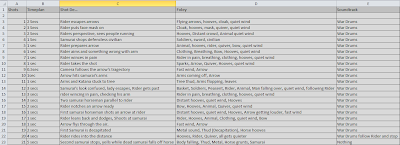


Thursday, 10 October 2013
Research, Notes and ideas for anti-social behavior
Research, Notes and ideas for
At York College, North Yorkshire police want us to create a video to rise the kids' awareness of Anti-social behaviour. Every group picks different subjects video like Shouting and Swearing, Littering for examples.
Our group choice was 'Misuse of Social Media' because I believe most kids have a lack of knowledge about cyber-bullying. So I used my best skills to make special effects to make this video a big selling point.
We use this effect “text message” in Hollyoaks
style. (Below photos)


Cyber-bullying Info graphic example video:
http://vimeo.com/46912852
I suggest that we don't need to do animation but we use the live actors in this video with full of effects (text message, photos/video uploading and Youtube, Facebook, Twitter theme (Not logo)
We might use the facts about cyber-bullies as taglines
For facts example:
We might use the facts about cyber-bullies as taglines
For facts example:
1 Nearly 43% of kids have been bullied online. 1 in 4 has had it happen more than once.
2 70% of students report seeing frequent bullying online.
3 Over 80% of teens use a cell phone regularly, making it the most common medium for cyber bullying.
4 68% of teens agree that cyber bullying is a serious problem.
5 81% of young people think bullying online is easier to get away with than bullying in person.
6 90% of teens who have seen social-media bullying say they have ignored it. 84% have seen others tell cyber bullies to stop.
7 Only 1 in 10 victims will inform a parent or trusted adult of their abuse.
8 Girls are about twice as likely as boys to be victims and perpetrators of cyber bullying.
9 About 58% of kids admit someone has said mean or hurtful things to them online. More than 4 out 10 say 10 it has happened more than once.
11 About 75% have visited a website bashing another student.
12 Bullying victims are 2 to 9 times more likely to consider committing suicide.
At the end, I suggest to use powerful quote like “As we watch this film… A person is cyberbullied every 2 minutes” This might make a huge impact to young kids. Or “Don't Stand By - Stand Up!”
Friday, 20 September 2013
Foley: sound effect unit 38
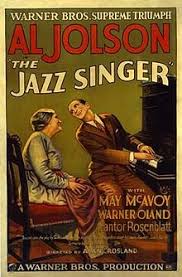
Jack Donovan Foley (1891-1967) began what is now known as Foley art in 1927. He had started working with Universal Studios in 1914 during the silent movie era. When Warner studios released its first film to include sound, The Jazz Singer, Universal knew it needed to get on the bandwagon and called for any employees who had radio experience to come forward.
http://puppettheatreblog.wordpress.com/tag/the-jazz-singer/
For example, the man who played the piano. He created the foley sounds for piano.
 If you recording all of foley sounds can be tiring and take a long time. Foley art can be broken down into three main categories Feet, Props, and Cloth.
Feet:
They used their feet to create a sound.
The recording studio had lots of different shoes and floors to make a sound.
Cloth:
They used lots of different type of cloths. The foley sounds are softer sounds.
For example, Foley artists will have to add the swishing of clothing as the actor’s pant legs rub together while they went downstairs.
Foley is recording sound in post production to improve the quality of the audio in a film. The key to recording Foley is to match production sound as closely as possible. For example, microphones typically used on production sets including Neumann KMR 81’s and Sennheiser 416’s to make this happen. http://www.cinematography.com/index.php?showtopic=49137
Any 'soft' sound in a film are improved using foley techniques. It is important to allow sfx to be added in post-production that improves the "soundscape" of the film. It also stops any copyright problems because all the sounds will be produced and created in-house. The sounds would be made more dramatic for example, 'Evil Dead' The noise of an ankle breaking was a pen and an apple snapping and crunching.
Foley effects are created through a new sound added into the film during production. They used the sound like footsteps, clothes rustling, crockery clinking, paper folding, doors opening and slamming, punches hitting and glass breaking.
For example: Sherlock Holmes Fight Scene
It has the main character in a fight scene. There are great examples of foley sound when the actors hit each other. Each punch has a sound like a crunch of bones like the sound of rock's falling when the actor fall down. The movement of the punch is slowed down to show the drama of it. Wind sounds are created to show that the punch is powerful and it is going to hurt the other fighter. There is also a narration which is non-diagetic because in the world of the film the characters cannot hear it, only the viewer.
Diagetic:
For example: Fast and Furious 3 : Tokyo Drift - Race 1: I think the sound of the cars racing is diagetic sound. It makes it believable and realistic. It creates a mood of excitement with the spinning cars. It makes the heart beat faster.
Look at the example: The diagetic sound of screaming is used throughout the trailer to create the thriller and scary effect. The sound of the voices are purposely poor but it matches the home movie handy cam film style.

You could see where the sounds came from.
Non-diagetic means there are sounds that are going into the editing process.
For example, the voice over of god, narration, SFX (guns/explosions etc) and mood music.
It can be any sound which is not naturally in the clip. Music is added for a certain effect, this music is non-diagetic sound.
In Requiem for a Dream, the drugs scene is a good example of non-diagetic sounds. Each clip is very short and is enhanced by the foley sound. For example, the sounds of the drug powder landing on the table is like the sound of the mouth with air leaving it.
For example: Paranormal Activity 3 Trailer (Official)
Non-diagetic sound is used throughout the trailer to scare the audience such as a "woooosh" sound effect. The trailer establishes that the film is based around a family in their own home, and also establishes that the daughter of the family has some connection to the ghost.

The viewers and characters couldn't see where the sound come from. The pan made a noisy in thekitchens.
Diagesis means the telling of a story by a narrator. The narrator can be a character or may be invisible to the viewer but only heard by the viewer, or is coming from above and commentating on the action of the film for example, Sherlock Holmes fight scene.
Mood and meaning
Non-diagetic sounds could be added when a character has just found out about a tragedy, there would probably be soft slow music playing in the background to show the viewer the character’s emotions and to sympathize with their pain.
In The Ruby Slippers - The Wizard of Oz (3/8) Movie CLIP (1939) HD The conversation that is going on between the three characters is linked by the music being played as background,. the emotion in the voice is copied by the music. The non-diegetic music is supporting the narrative, but at the same time it is giving the audience a more emotional attachment to the scene.
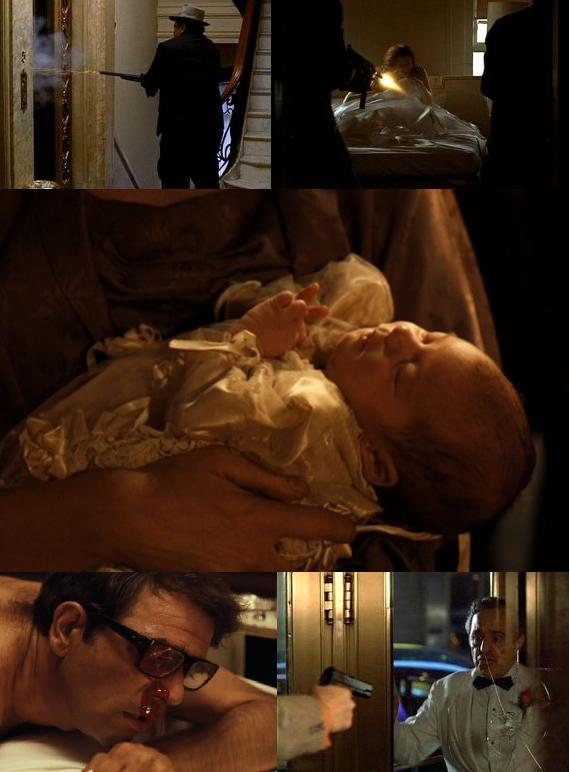
There are two different types of music about birth and death playing along side each other to create tension and confusion for the viewer.
Juxtaposition in sound soundtracks.
Two things put together which are very different. For example, happy music at a funeral and a horror scene with happy music. It is put there to confuse the viewer. Jeeper's Creeper is a happy song used in a scary film. it gives a creepy feel to it. The viewer is expecting something horrific to happen in the following scenes. Jeepers Creepers Song (Lyrics)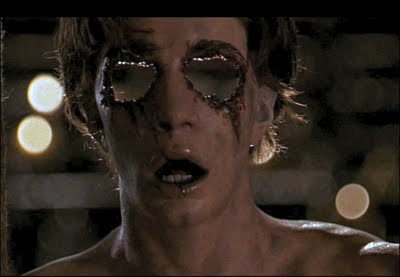
Michael Moore uses juxtaposition in Fahrenheit 911, when he plays the song "What a Wonderful World" while playing scenes of war and violence.
The final scenes in The Godfather 3 are also a good example. You see the family attending the baptism ceremony and you see the murders taking place. there are two scenes linked with each other so you see them happen one after the other. The baptism is the good, celebrating the birth and naming the child, the other is dark, bloody and evil. Heavy, dramatic organ music plays for both scenes. Here is other example, The Baptism Murders - The Godfather (8/9) Movie CLIP (1972) HD
http://puppettheatreblog.wordpress.com/tag/the-jazz-singer/
For example, the man who played the piano. He created the foley sounds for piano.
Feet:
They used their feet to create a sound.
The recording studio had lots of different shoes and floors to make a sound.
Cloth:
They used lots of different type of cloths. The foley sounds are softer sounds.
For example, Foley artists will have to add the swishing of clothing as the actor’s pant legs rub together while they went downstairs.
Any 'soft' sound in a film are improved using foley techniques. It is important to allow sfx to be added in post-production that improves the "soundscape" of the film. It also stops any copyright problems because all the sounds will be produced and created in-house. The sounds would be made more dramatic for example, 'Evil Dead' The noise of an ankle breaking was a pen and an apple snapping and crunching.
Foley effects are created through a new sound added into the film during production. They used the sound like footsteps, clothes rustling, crockery clinking, paper folding, doors opening and slamming, punches hitting and glass breaking.
For example: Sherlock Holmes Fight Scene
It has the main character in a fight scene. There are great examples of foley sound when the actors hit each other. Each punch has a sound like a crunch of bones like the sound of rock's falling when the actor fall down. The movement of the punch is slowed down to show the drama of it. Wind sounds are created to show that the punch is powerful and it is going to hurt the other fighter. There is also a narration which is non-diagetic because in the world of the film the characters cannot hear it, only the viewer.
Diagetic:
Diegetic, Non-Diegetic, Juxtaposition, Mood
and Meaning;
- Add
another example for each of these in the same level of detail previously.
Really good so far
For example: Fast and Furious 3 : Tokyo Drift - Race 1: I think the sound of the cars racing is diagetic sound. It makes it believable and realistic. It creates a mood of excitement with the spinning cars. It makes the heart beat faster.
Look at the example: The diagetic sound of screaming is used throughout the trailer to create the thriller and scary effect. The sound of the voices are purposely poor but it matches the home movie handy cam film style.
You could see where the sounds came from.
Non-diagetic means there are sounds that are going into the editing process.
For example, the voice over of god, narration, SFX (guns/explosions etc) and mood music.
It can be any sound which is not naturally in the clip. Music is added for a certain effect, this music is non-diagetic sound.
In Requiem for a Dream, the drugs scene is a good example of non-diagetic sounds. Each clip is very short and is enhanced by the foley sound. For example, the sounds of the drug powder landing on the table is like the sound of the mouth with air leaving it.
For example: Paranormal Activity 3 Trailer (Official)
Non-diagetic sound is used throughout the trailer to scare the audience such as a "woooosh" sound effect. The trailer establishes that the film is based around a family in their own home, and also establishes that the daughter of the family has some connection to the ghost.
The viewers and characters couldn't see where the sound come from. The pan made a noisy in thekitchens.
Diagesis means the telling of a story by a narrator. The narrator can be a character or may be invisible to the viewer but only heard by the viewer, or is coming from above and commentating on the action of the film for example, Sherlock Holmes fight scene.
Mood and meaning
Non-diagetic sounds could be added when a character has just found out about a tragedy, there would probably be soft slow music playing in the background to show the viewer the character’s emotions and to sympathize with their pain.
In The Ruby Slippers - The Wizard of Oz (3/8) Movie CLIP (1939) HD The conversation that is going on between the three characters is linked by the music being played as background,. the emotion in the voice is copied by the music. The non-diegetic music is supporting the narrative, but at the same time it is giving the audience a more emotional attachment to the scene.
There are two different types of music about birth and death playing along side each other to create tension and confusion for the viewer.
Juxtaposition in sound soundtracks.
Two things put together which are very different. For example, happy music at a funeral and a horror scene with happy music. It is put there to confuse the viewer. Jeeper's Creeper is a happy song used in a scary film. it gives a creepy feel to it. The viewer is expecting something horrific to happen in the following scenes. Jeepers Creepers Song (Lyrics)
Michael Moore uses juxtaposition in Fahrenheit 911, when he plays the song "What a Wonderful World" while playing scenes of war and violence.
The final scenes in The Godfather 3 are also a good example. You see the family attending the baptism ceremony and you see the murders taking place. there are two scenes linked with each other so you see them happen one after the other. The baptism is the good, celebrating the birth and naming the child, the other is dark, bloody and evil. Heavy, dramatic organ music plays for both scenes. Here is other example, The Baptism Murders - The Godfather (8/9) Movie CLIP (1972) HD
Planning for the Soundtrack;
Remember to include the planning documentation
for the soundtrack for animation. This must include; Sounds to be created, how
to produce the sounds, locations and timingsThursday, 19 September 2013
Unit 5 outcome 1
Learning
outcome 1: unit 5
The brief is really useful to client and
filmmaker and the filmmaker can check the brief if they can do it in full confidence
or it can match the filmmaker’s skills and knowledge.
Structure of a brief
Contractual:
Contractual is like contract, for example a client
and a media firm agree to create the contract of works. The contract can have
details about what a client wants. The client and the media firm negotiate an
agreed time and amount of money to be pay. The client and you make an agreement
to keep the information of the brief private.
It
has a good format because the contract might have more great detailed to avoid
any misunderstanding. However it’s quite non-flexible, so not so good where the
project change as it progresses.
Negotiated:
Negotiated is like making a deal in between the
client and a media firm. For example, the client wants it finished in two weeks,
however, the media firm disagrees with it. They need two weeks more. They will
make a decision and they agree the conditions.
Ii’s good because
the client will get what he/she wants,
but because the media firm is not competing against others the client doesn’t
know if they are getting a good price.
Formal:
A formal meeting is when the client invites the
media firm to come to his/her meeting room. The client expects the media firm
to show their works to the client. They discuss about the work. The client gives
the brief to the media firm for approval. Formal briefs are written documents with
budget, detail and deadlines.
An advantage, the client and agency agree on exact
terms and conditions. The agency knows exactly what they must do within the
agreed budget. However at disadvantages, it’s a bit less freedom to be creative
than Informal.
Informal:
An informal is opposite to formal. The informal can
be, emails to send the brief and call
the media firm to discuss the brief or using the webcam. A contract would still
have to be agreed and signed by both the client and the media firm.
An advantage, the agency that does the work has more
creative control over the final project. This might make the project work speed up but
if the brief is not written there then it might be some misunderstanding later.
Commission:
Commission means the client recognise the
media firm has a good reputation. The client likes their work. He/she want them
to do some special work for them. The client will offer a commission to the
firm to do produce a specific piece of work.
The media firm do the work what they want to
for the client. The project would be faster if others have not been invited.
However, if the work does not go to plan the agency’s reputation might be
ruined.
Tender:
The client sends the briefs to all of the
media firms to make the pitches for him/her. As media firms would fight other
media companies to get the work. The client looks for the best reputation,
costing and the best skills.
There is a good way of making sure the client
gets what they want at the right price, but it takes some time to talk the
process.
Cooperative brief:
The client sends to some of media companies
to work together. The media companies discuss what roles they should
get to meet the client’s requirement. They have to work to the same budget.
They have to work as team and communicate for information about work and
deadlines.
This would be good for two different firms to share their
complicated jobs. However, it will be more important to make sure there is a
written agreement. So they know what they are supposed to be doing.
Competition:
The media firm will be in competition but
main thing is more likely that brief might few detailed. A lot of businesses
can apply and compete against each other. The client will pick the best idea
within the budget.
An advantage, lots of great ideas and a great
reward if the client chooses you.
A disadvantage, it might be hard to decide in
between all of the media firms that have forward their proposals could slow the
project down.
Negotiating the brief.
- The client may not understand any problems that you have in the
production. Example, the client did not know that the filmmaker did not
have the specific equipment. The filmmaker may be unable to match his
skills to the brief.
- You need to negotiate deadlines in detail for example, a time
schedule. The client may not understand about the post-production
processing.
- You will need to make them aware of copy right. The owner of
the work has their right however others cannot copy it unless it has their
licence agreement.
- If you don't read and too confident about the brief and then decide
to sign it, you must have to fulfil the terms of the brief. If you break the
brief’s conditions then legal action could be taken by the client against
you and you could end up in court.
- over ambitious expectations happen when the client or the
film company agree to certain terms which create problems when the work
has started. For example, the client expects work to be done in one week
but the company is unable to make it after one week or they promise to
complete the work to a certain deadline but it is impossible to do.
Amendments:
There may be changes to the agreed brief, for
example the budget might be bigger than you thought example, using good quality,
printer ink, or travel to locations, equipment and actors you might need for
the film. This would need negotiating with thee client to agree on either a new
budget or the project will have to completed with different, cheaper equipment.
The original brief will have the fee the film
company will be paid for, for the creation of their project however, some
contracts will have a condition (rule) in it that says the amount of money paid
to the film company can be amended – paying a higher fee or a lower one. This
might happen if the final work is not the quality the client expected.
Self Development:
The brief would help me to find a new way to
development my new skills, knowledge and exploring the method of learning a new
tools from media software. I will learn how to research the background of ASBOs
and how they work. I will learn a new skill using the 3D maker software such as
3D MAX software for a title and then learn about how to import 3D objects into
After effect CS6 from 3D MAX software. I would learn about using a new type of
video formats for an internet because it’s very easy to upload to the police’s website
or YouTube. I will improve the soundtrack to appear to our audience.
Learning new skills:
I will learn how to follow a brief and
understand the client’s wishes and think a twice before you sign the contract.
Multi-skilling:
My time management must be good to keep to
deadlines. So I will do a plan of each bit of work and the days I will do it. I
will use the speadsheet for film schedule.
Subscribe to:
Posts (Atom)